Why is the District implementing the Drought Contingency Plan (DCP)?

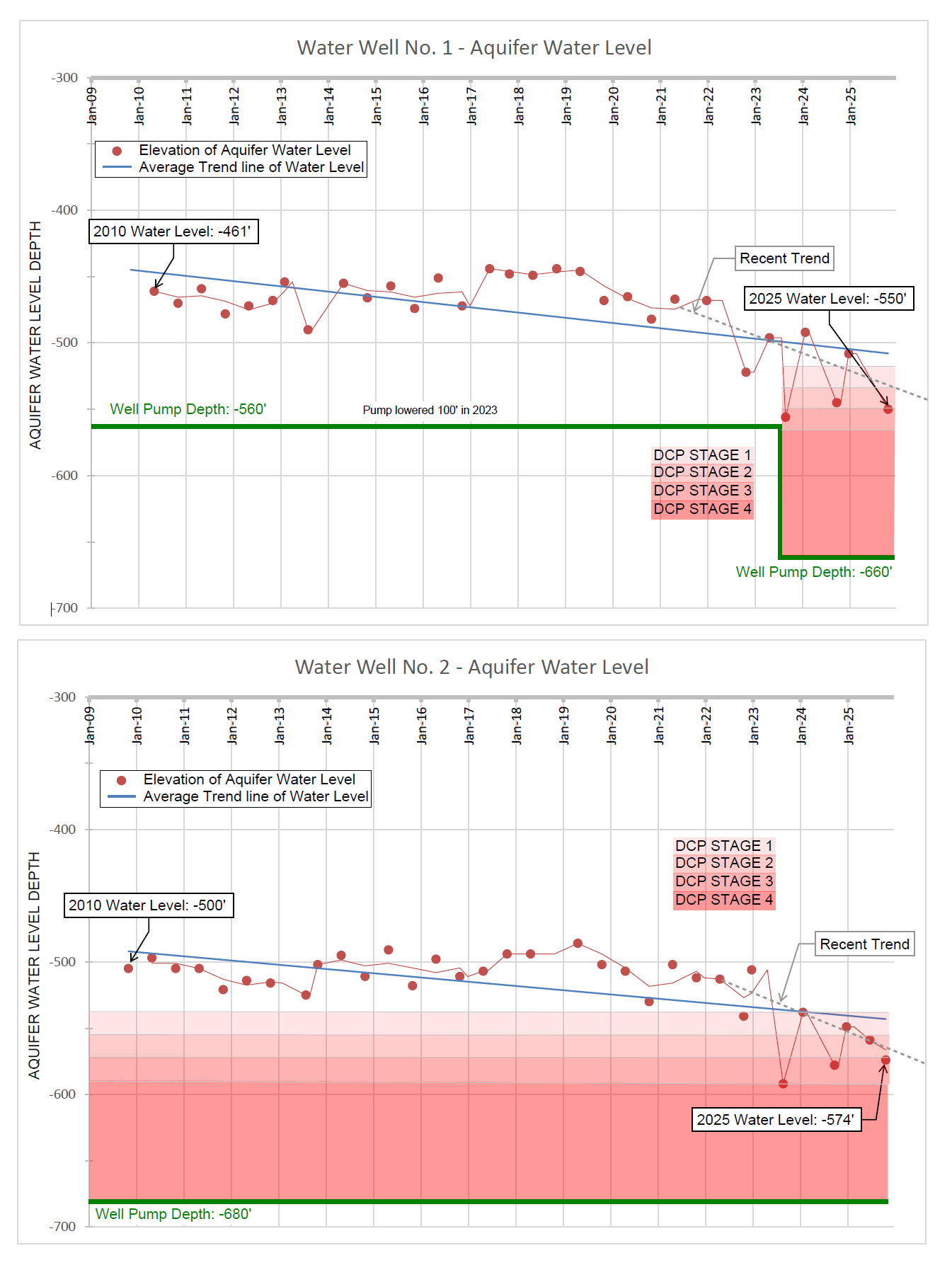
Due to the ongoing drought conditions and increased water usage, our water well production continues to increase year over year. Over the years, we have seen continued decline in the water levels in the aquifer.

The graph shows the trending decline in the aquifer’s water level for Water Well Nos. 1 & 2 (both Evangeline Aquifer).  Up until about 2022, the water levels in the aquifer had remained fairly constant, but since 2022, the levels have dropped almost 100 feet. The District has recently adopted new parameters based on the amount of submergence from the pump elevation in the well to the water level. As the pump submergence decreases, the Drought Stage Contingency could progress to the next stage, which is why it is important to conserve water and follow the drought stage contingency requirements (see District’s website for more information on the restrictions).

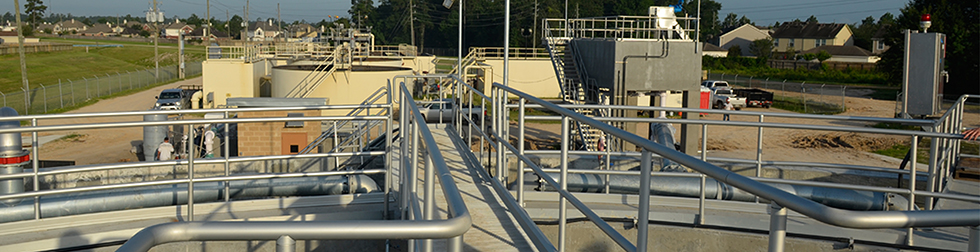
The District is also in the early stages of acquiring surface water from the San Jacinto River Authority (SJRA) from Lake Conroe.  Unfortunately, we are still a couple years away from having the infrastructure in place to receive the surface water, therefore water conservation is key to ensure water availability and health of the aquifers.  The addition of surface water supply will help provide an alternative source of water to the District and help relieve the demand on the aquifer.
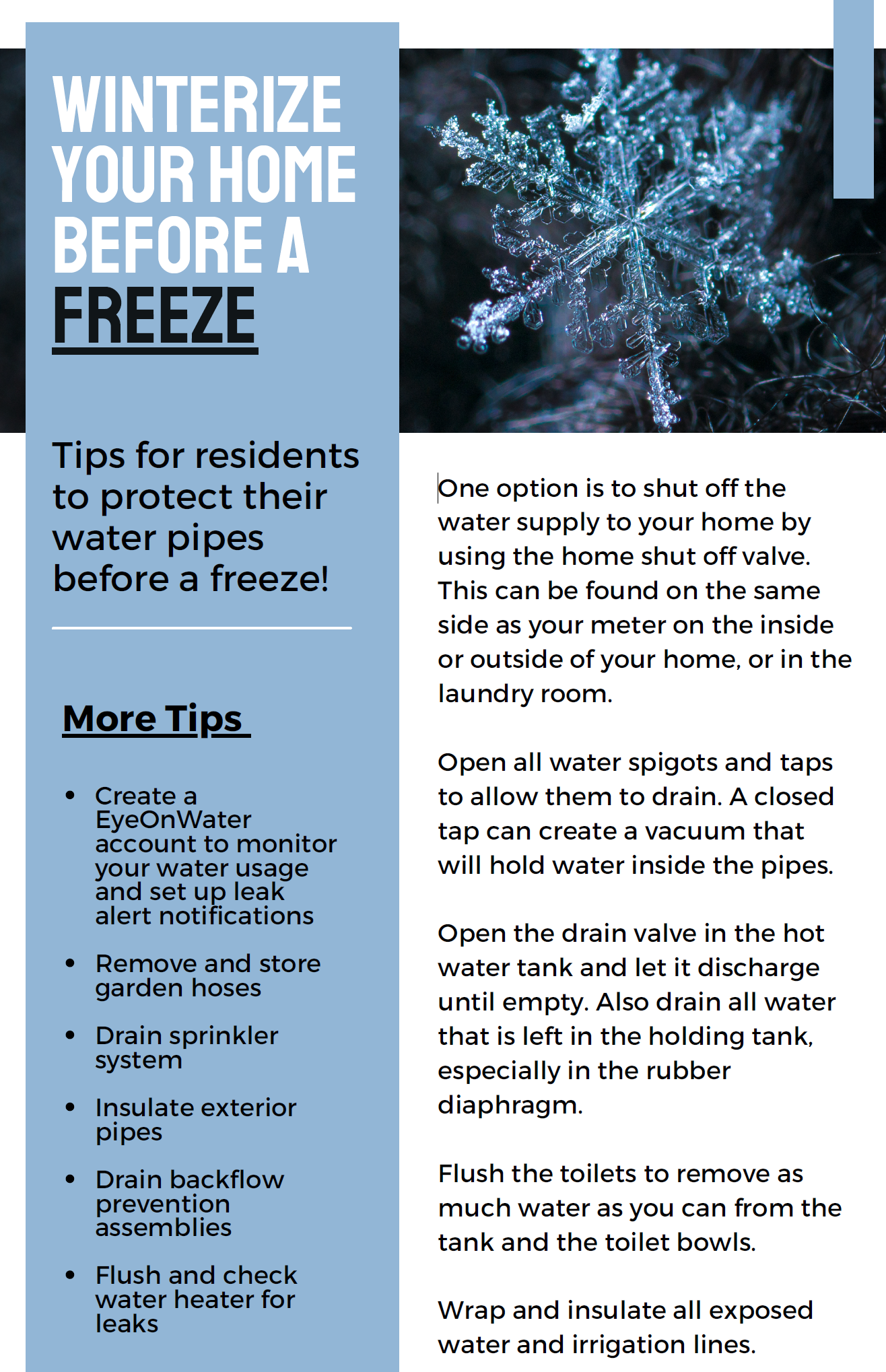
Winterize Your Home Before a Freeze

Prepare for the Freeze

Protect Your Pipes

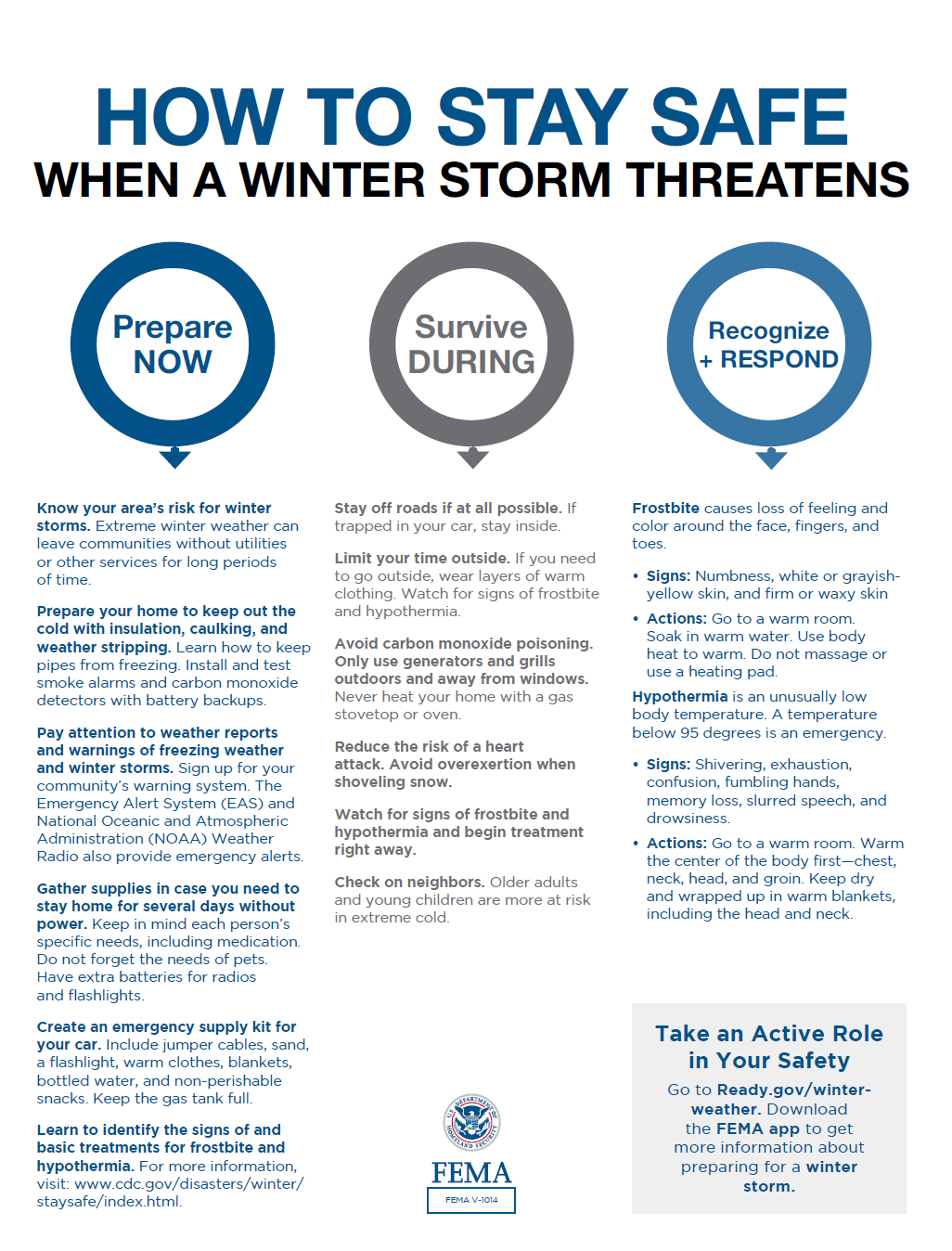
Freezing conditions are set to arrive early next week with low temperatures in the 20s expected. Be sure to protect your pipes!

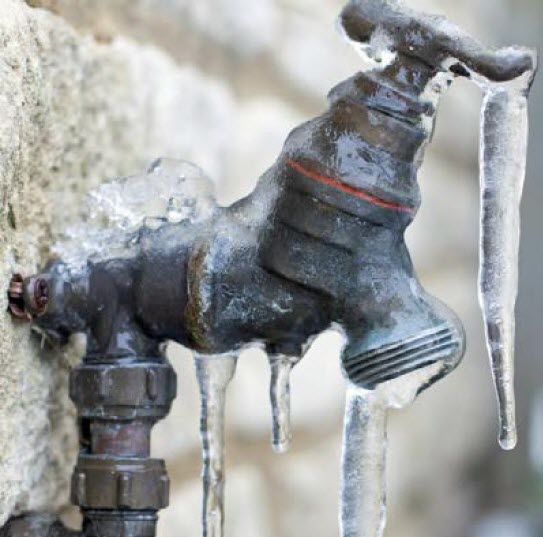
Why Pipe Freezing is a Problem – Water expands as it freezes and pipes that freeze most frequently are those that are exposed to severe cold, like outdoor hose bibs, swimming pool supply lines, water sprinkler lines, and water supply pipes in unheated interior areas like attics, garages or kitchen cabinets. Pipes that run against exterior walls that have little or no insulation are also subject to freezing.

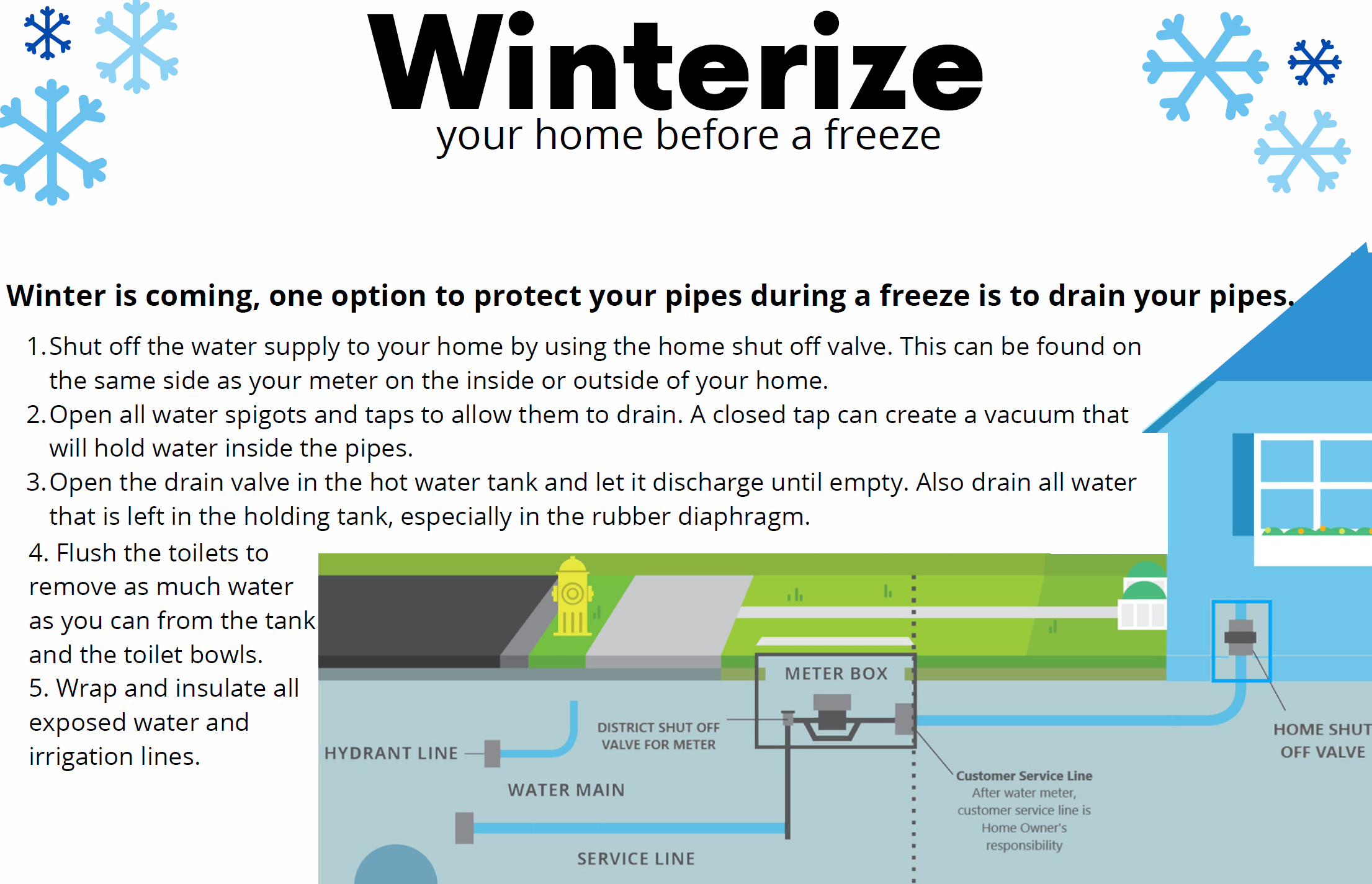
How To Prevent Your Pipes From Freezing
  • Drain water from swimming pool and water sprinkler supply lines following manufacturer’s or installer’s directions.
  • Remove, drain, and carefully store all hoses that are used outdoors.
  • Both hot and cold-water pipes in unheated areas should be insulated. A hot water supply line can freeze just as easily as a cold-water supply.
  • Consider installing specific products made to insulate water pipes like a “pipe sleeve” or installing UL-listed “heat tape”, “heat cable” or similar materials on exposed or susceptible to freezing water pipes.
  • When the weather is very cold outside, let the cold and hot water drip from the faucet served by pipes that are susceptible to freezing. Running water through the pipe – even at a trickle – helps prevent pipes from freezing because the temperature of the water running through them is above freezing.

If you suspect that the plumbing may be frozen at the point where the pipe goes under the house or in the attic, it is safest to call a plumber as it may be cracked and burst when thawed.

In the event of an emergency, please contact our operator, Municipal Operations & Consulting, at (281) 367-5511. Water running in the street or buckled pavement are signs of a water main break and should be reported immediately.

MANDATORY WATER RESTRICTIONS IN PLACE: Stage 2 of the District’s Drought Contingency Plan Has Been Triggered

Please limit irrigation and lawn watering to the days indicated below.
  • Thursdays & Sundays for Retail Water Customers with an Even Numbered Address (0, 2, 4, 6 or 8)
  • Tuesdays & Saturdays for Retail Water Customers with an Odd Numbered Address (1, 3, 5, 7 or 9)
  • Thursdays and Sundays for Retail Water Customers responsible for watering common areas.
Irrigation of landscaped areas is further mandatory limited to between the hours of 9:00 p.m. on the designated watering day(s) and 2:00 a.m. on the following day(s). However, irrigation of landscaped areas is permitted at any time if it is by means of a hand-held hose equipped with a functioning positive shut-off device, a faucet filled bucket or watering can of five (5) gallons or less, or drip irrigation system.
  • Use of water to wash any motor vehicle, motorbike, boat, trailer, airplane or other vehicle is prohibited except between the hours of 9:00 p.m. on the designated watering day(s) and 2:00 a.m. on the following day(s). Such washing, when allowed, shall be done with a hand-held bucket or a hand­held hose equipped with a functioning positive shut-off device. Vehicle washing may be done at any time on the immediate premises of a commercial car wash or commercial service station. Further, such washing may be granted a variance from this restriction in accordance with Section XI of this Plan if the health, safety, or welfare of the public is contingent upon frequent vehicle cleansing, such as garbage trucks and vehicles used to transport food and perishables.
  • Use of water to fill, refill, or add to any Aesthetic Water Use is prohibited except between the hours of 9:00 p.m. on the designated watering day(s) and 2:00 a.m. on the following day(s).
  • Operation of any ornamental fountain or pond for aesthetic or scenic purposes is prohibited except where necessary to support aquatic life or where such fountains or ponds are equipped with a recirculation system.
  • Use of water from hydrants shall be limited to firefighting, related activities, or other activities necessary to maintain public health, safety, and welfare, except that use of water from designated fire hydrants for construction purposes may be allowed under special permit from the District.
  • Use of water for the irrigation of golf course greens, tees, and fairways is prohibited except between the hours of 9:00 p.m. on the designated watering day(s) and 2:00 a.m. on the following day(s). However, if the golf course utilizes a water source for irrigation other than that provided by the District’s potable water supply system, the golf course shall not be subject to this restriction.
  • All restaurants are prohibited from serving water to their patrons except when requested.
  • All other Non-essential Water Uses are prohibited.